
Checking Criminal History in Broward County
No single screen gives a complete Broward County record. Begin with the source closest to the event, then widen the scope. The Broward Clerk shows filed court cases. BSO holds its incident reports, local arrest checks, and county jail entries. A city police department keeps the report it created. FDLE's statewide product is broader, but it is not a copy of each pleading or booking page.
- Search the Broward Clerk by case number or full party name for filed criminal cases.
- Check BSO Arrest Search when recent county custody or booking is relevant.
- Ask BSO or the arresting city agency for the incident or arrest report.
- Use FDLE Instant Search for public statewide Florida history, or Personal Review for your own fingerprint-based Florida record.
- Compare identifiers and read the Clerk's final count-level disposition before relying on a match.
A full name, date of birth, spelling variants, agency, approximate date, and known case or arrest number can sharply reduce false matches. Never infer identity from a common name alone.
Broward's Three Criminal Record Layers
A booking record, court file, and FDLE history answer different questions. BSO creates a booking entry when a person enters county custody. It lists intake facts, arrest allegations, bond, and facility. The Clerk file begins when a case is filed and tracks the prosecuted counts, hearings, orders, disposition, and sentence. FDLE groups fingerprint-supported arrest cycles with dispositions agencies report to the state.
| Record | Custodian | Best use | Key limit |
|---|---|---|---|
| Booking | BSO detention | Recent custody and bond | An arrest allegation is not a conviction. |
| Court file | Broward Clerk | Filed charges and outcomes | Protected images may not display online. |
| Florida history | FDLE CJIS | Statewide reported cycles | Name search is not positive fingerprint identification. |
Charges can differ among all three. A prosecutor may decline, reduce, or replace an arrest charge. A dismissal does not by itself erase the booking record.
Florida Official Background Checks
The Florida Department of Law Enforcement, Division of Criminal Justice Information Services, maintains the central repository. Any member of the public can order a $24 name-based Instant Search. Results can be printed or emailed. Certified and ORI products serve other defined channels. A public name match depends on the identifiers entered and on data Florida agencies sent to FDLE.
For your own record, FDLE Personal Review is free. A law-enforcement or criminal-justice agency must take the fingerprints, and the signed application and fingerprint card go by mail to FDLE. The review can take up to 30 working days and supports a formal challenge to incomplete or wrong data. Authorized statutory checks use an agency ORI and an FDLE-registered LiveScan provider. Provider rolling fees vary.
| FDLE Instant Search | $24 public Florida name search. |
|---|---|
| FDLE Personal Review | Free fingerprint-based review of the subject's own Florida record. |
| Authorized LiveScan | ORI-based fingerprint transmission with variable state, federal, and vendor fees. |
| FBI Identity History | $18 self-record summary, plus any fingerprint or channeler cost. |
FDLE Search Fields for Broward Records
The public FDLE form starts with name fields. Date of birth is strongly recommended because it can narrow a common name, while race and sex can further distinguish candidates. Middle name and suffix should match the person's legal record when known. Sensitive identifiers should be entered only in an official portal where permitted.
| Field | Need | Search value |
|---|---|---|
| Last Name | Required | Legal surname |
| First Name | Required | Full given name |
| Middle Name | Optional | Narrows similar names |
| Name Suffix | Optional | Use when applicable |
| Date of Birth | Strongly recommended | MM/DD/YYYY |
| Race and Sex | Optional | Demographic narrowing |
The official FDLE Instant Search source supplied the interface image below.
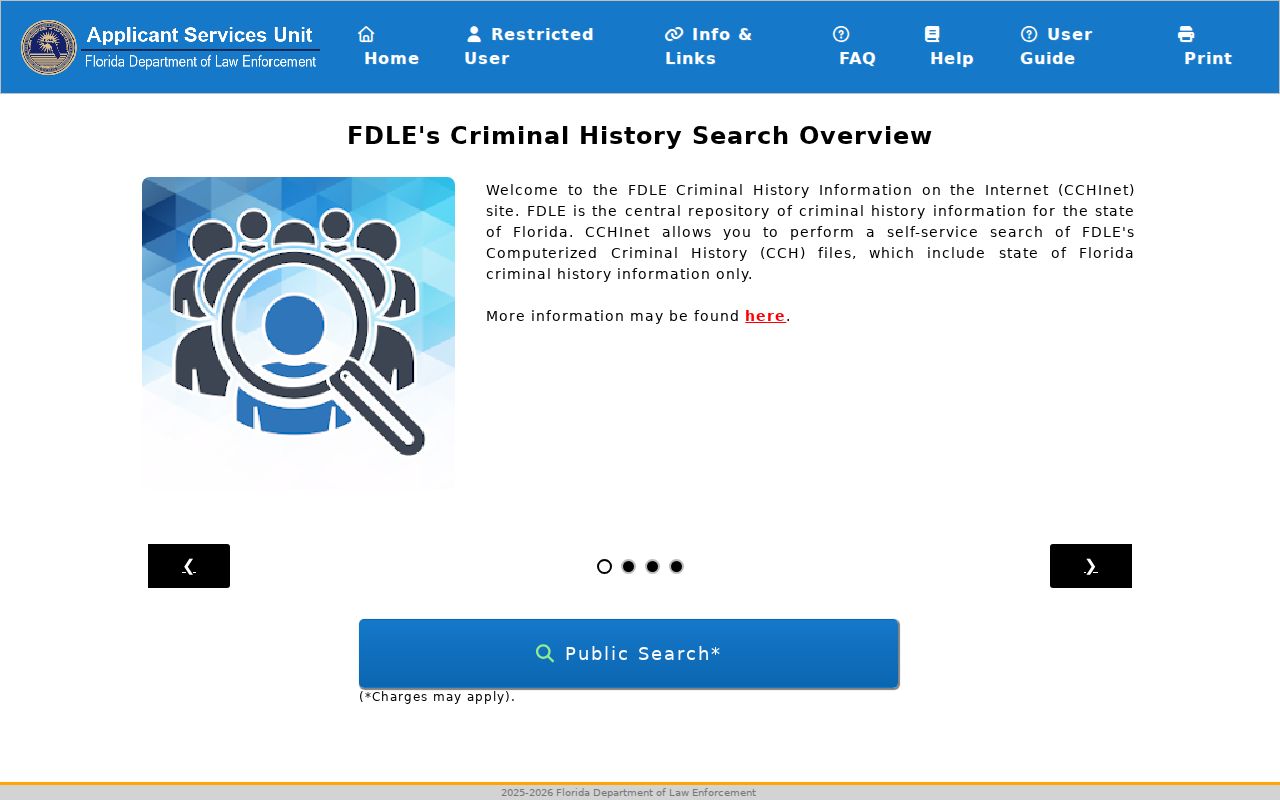
The form's name-based design explains why the Clerk's case number and disposition remain vital for verification.
Criminal Record Types
Broward County criminal records are created at different steps. The arresting police agency writes the incident or arrest narrative. BSO detention creates the booking record. The State Attorney files the information, while the Clerk maintains the resulting case docket. FDLE compiles eligible fingerprint-linked cycles reported from across Florida. FDC holds state prison and adult community-supervision information.
- Incident and arrest report: the agency narrative, alleged offenses, time, place, and enforcement action.
- Booking entry: intake number, booking charges, bond, custody, facility, fingerprints, and photograph.
- Court docket: filed counts, hearings, motions, judgments, disposition, and sentence.
- Repository history: fingerprint-linked arrest cycles and reported outcomes.
- Warrant or corrections record: court process, custody, prison, probation, or parole data held by the responsible office.
Juvenile, sealed, expunged, victim, and active-investigation information may be restricted. A public-record request does not override a statutory exemption.
Broward Clerk Location Codes
Broward's Clerk uses four courthouse location codes: 10 Central, 20 North, 30 West, and 40 South. They point to the file's assigned service location. Central is the Judicial Complex in Fort Lauderdale. Regional courthouses are in Deerfield Beach, Plantation, and Hollywood. The nearest courthouse is not always the one holding a requested criminal file.
The Judicial Complex includes West, East, North, and Midrise buildings. The West Tower opened in 2017 with 77 courtrooms. Felony Clerk services are in Room 1882 of the North Building, while Archives is in Room 03305 of the East Building. Active construction can change routes, but every public entrance still requires security screening. Confirm the case location and current court notice before going.
Inside a Broward County Criminal Record
The content depends on the custodian. FDLE emphasizes identity and fingerprint-supported arrest cycles. The Clerk emphasizes case number, division, filed counts, events, and judgment. BSO emphasizes the booking number, intake, booking allegations, bond, and current facility. Compare like fields instead of expecting the screens to match word for word.
| Name and Identifiers | Legal name, aliases, birth date, descriptors, SID, case number, or booking number as applicable. |
|---|---|
| Arrest and Booking | Date, agency, arrest number, booking charges, bond, facility, and custody status. |
| Charges and Statutes | Alleged arrest offenses or the prosecutor's filed counts with Florida citations. |
| Disposition | Conviction, dismissal, acquittal, nolle prosequi, withhold, or other count-level result. |
| Sentence | Custody, probation, fines, credit, and court conditions shown in public records. |
| Supervision | FDC prison, probation, community-supervision, or release information when public. |
A disposition is the case outcome. Nolle prosequi means the prosecutor stopped a filed charge. Adjudication withheld is not a dismissal. Read the signed order when a docket abbreviation is unclear.
BSO Local Checks Stay in Broward
The BSO Public Records Unit offers a Local Records Check, but its scope is arrest-only and Broward-only. It relies on records that county agencies supplied to BSO. It omits non-arrest contacts and all history outside Broward. Use FDLE when statewide Florida scope is needed.
BSO accepts public-record requests through its online records portal, by telephone at (954) 831-8700, and by mail to the Public Records Unit, PO Box 9507, Fort Lauderdale, FL 33310. Give a clear record type, date range, location, agency, and any incident, arrest, or case number. Fees depend on the record and labor, and BSO provides an estimate before paid work. Do not duplicate an open request because that adds work without speeding the queue.
Broward Clerk of Courts
201 SE 6th Street, Fort Lauderdale
(954) 831-6565
Filed
cases and court copies
BSO Public Records Unit
PO Box 9507, Fort Lauderdale, FL 33310
(954)
831-8700
BSO reports and local checks
FDLE CJIS
Florida statewide repository
Public search and personal
review
Public Access Laws in Florida
Florida Public Records Law, Chapter 119, requires inspection and copying of nonexempt public records. The custodian may redact protected parts rather than withhold an otherwise open record. Court files also follow Florida Rule of General Practice and Judicial Administration 2.420. FDLE dissemination has separate criminal-history rules.
Key authorities:
Florida Statutes Chapter 119 governs access, copying, fees, and exemptions for agency records.
Florida Statute §943.053 controls FDLE dissemination and public criminal-history fees.
Florida Statute §943.056 gives a person access to and a challenge process for their own Florida record.
Florida Rule 2.420 governs public and confidential judicial records.
Ask the office that created or maintains the item. The Clerk cannot turn a docket into a fingerprint record, and BSO cannot supply every city police narrative.
When Broward Records Do Not Match
A no-result screen does not prove that no event exists. FDLE warns that its CCH may miss a notice to appear, direct-file case, or sworn complaint when no booking or later fingerprint submission occurred. A court disposition can also reach the Clerk before it appears in the repository. Conversely, an arrest cycle may remain even after the filed charge changes.
Check the Broward Clerk first for the judicial outcome. Then request the underlying report from BSO or the arresting municipal agency. For your own state record, order FDLE Personal Review and use its challenge channel if the identifiers or disposition are wrong. The official Personal Review instructions supplied the image below.
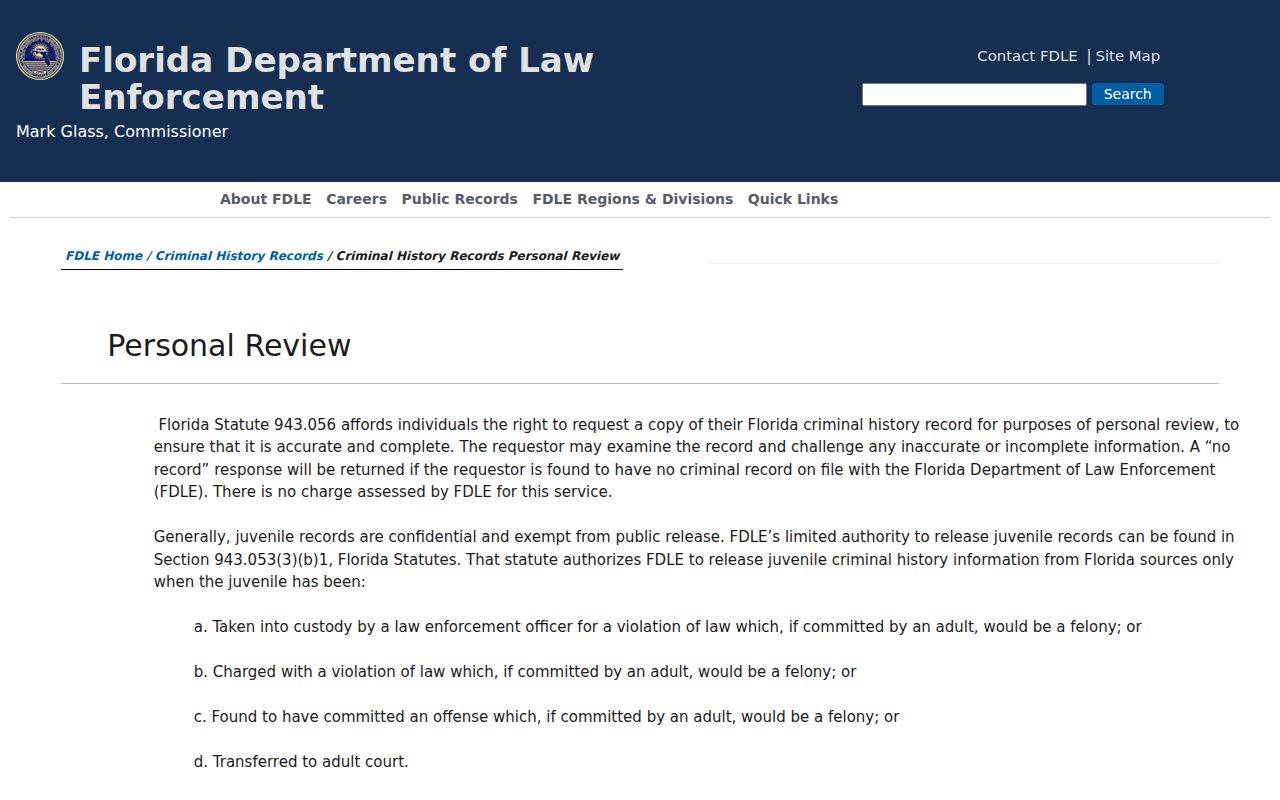
This self-review route uses fingerprints and is the proper basis for asking FDLE to correct or complete your own Florida history.
Sealed, Expunged, and Restricted Records
Florida treats court-ordered sealing and court-ordered expunction as different remedies. Sealing restricts public access to an eligible record. Expunction generally directs qualifying agencies to destroy or remove eligible records, while FDLE retains confidential information allowed by law. Eligibility is controlled mainly by Florida Statutes §§943.0585 and 943.059.
The usual Broward sequence begins with an FDLE Certificate of Eligibility. The certificate application has a $75 fee and supporting requirements. After FDLE issues it, the person files the petition, affidavit, proposed order, and required documents with the Broward Clerk, then serves the required agencies. A judge decides the petition. Relief is not automatic just because a charge was dismissed.
Juvenile records, protected victims' data, confidential intelligence, active investigative details, and sealed court material have separate rules. Public screens may hide or omit them even though an authorized custodian retains a lawful record.
Warrants Need Direct Verification
A Broward warrant or capias begins with the issuing court, while the Clerk and law-enforcement agency track its status. Public case search may show a warrant event. BSO's records channels can help with releasable agency material, but no public result should be treated as a safe-to-ignore answer when a person's own liberty is at issue.
Use the Clerk case number to review the docket and contact the issuing court or responsible law-enforcement office directly. Sealed, juvenile, and operational warrant information may be withheld. Do not approach another person based on an online result. A lawyer or the issuing court can explain the lawful way to address your own active process.
After Broward Jail Comes State Custody
BSO's detention system covers county custody, including Central Intake and four principal jail facilities. Once a sentenced person moves to Florida prison or adult community supervision, the appropriate official locator is FDC Offender Search. It can be searched by name or DC number and is not a Broward jail roster.
The official FDC Offender Search source supplied this image of the state prison and community-supervision search.
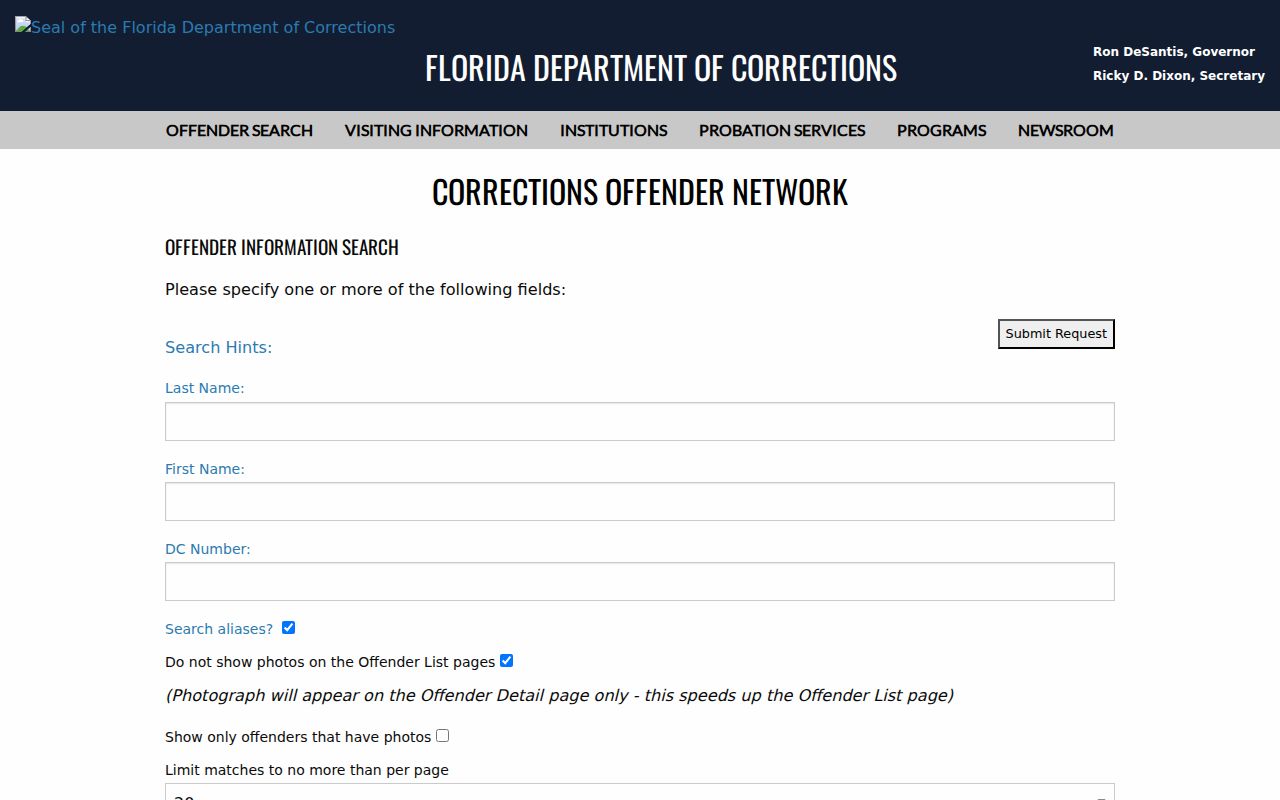
The change of custodian explains why a BSO jail result can end while a state corrections record begins.
Federal custody is separate again. The Bureau of Prisons locator source covers federal custody records from 1982 forward.
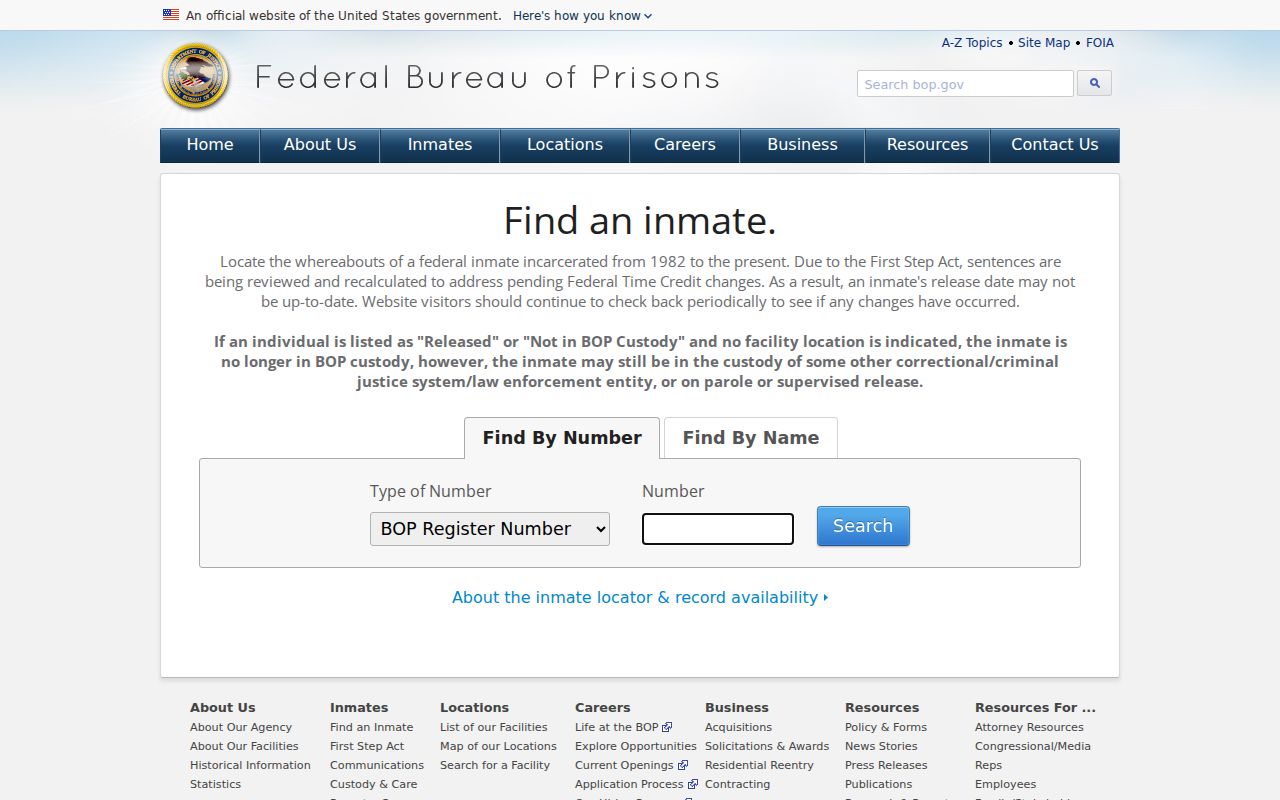
A federal locator result should be paired with PACER or the federal court for the case file, not with Broward Clerk records.
Broward Prosecutor and Defense Roles
The Broward State Attorney decides whether and what to file. The office handles felony, misdemeanor, juvenile, and specialty matters, along with diversion and conviction review. The Public Defender represents qualifying people appointed by the court, but it is not custodian of all public case files. Copy requests still go to the Clerk.
The official Broward State Attorney source supplied the office image below.
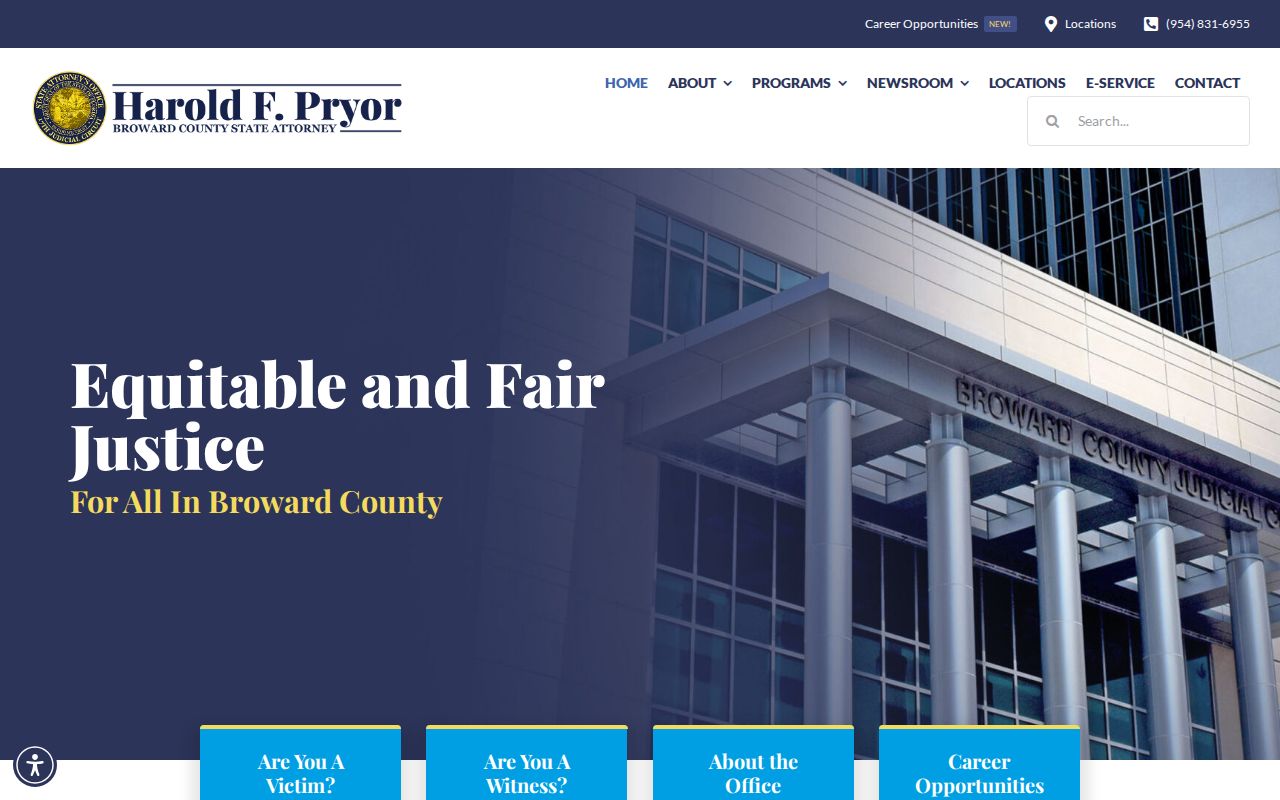
The prosecutor's filing decision explains why booking allegations and docket charges can differ.
The official Broward Public Defender source supplied this office image.
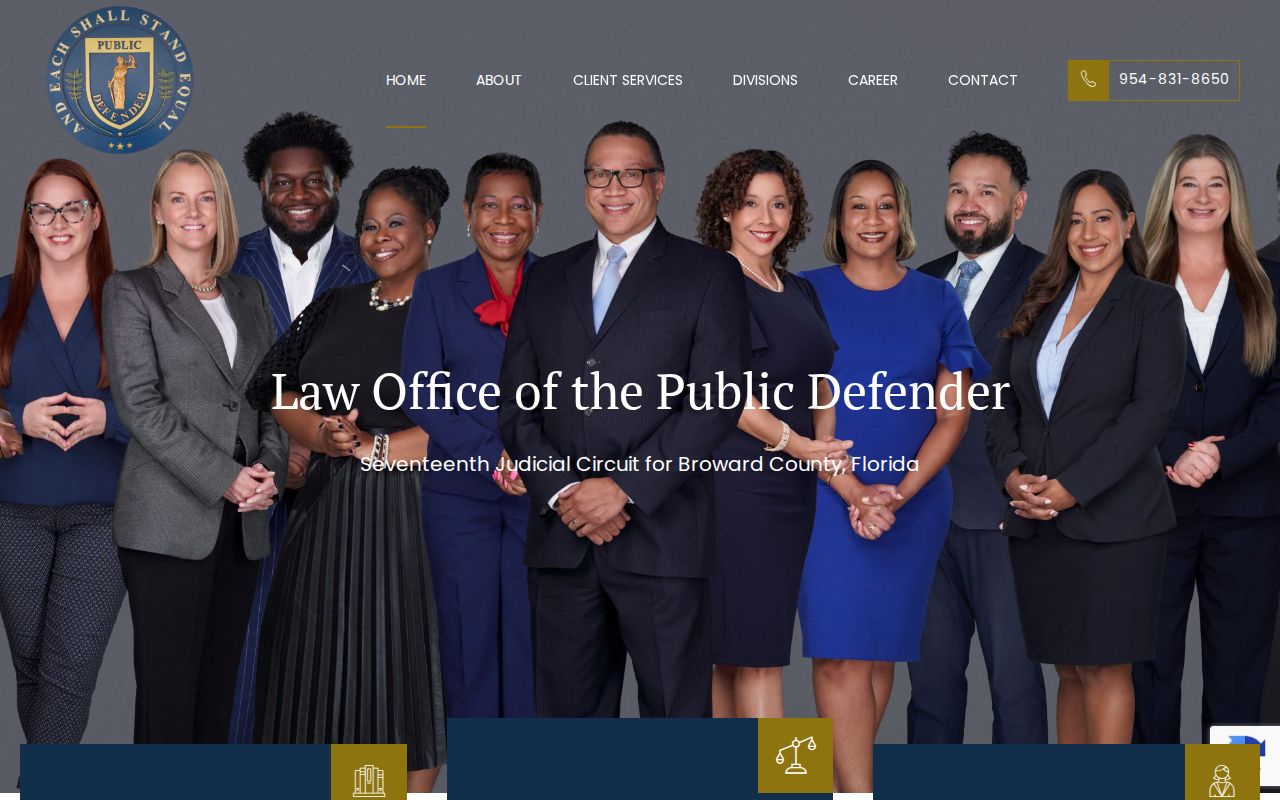
Defense counsel is part of the case process, while the Clerk remains the public file custodian.
Federal Records in Fort Lauderdale
Federal charges are not filed in Broward County Circuit or County Court. The U.S. District Court for the Southern District of Florida has a Fort Lauderdale Division, and PACER supplies federal docket access. An FBI Identity History Summary is a person's own fingerprint-derived federal summary, not a Broward court search.
The Southern District of Florida source supplied the federal court image below.
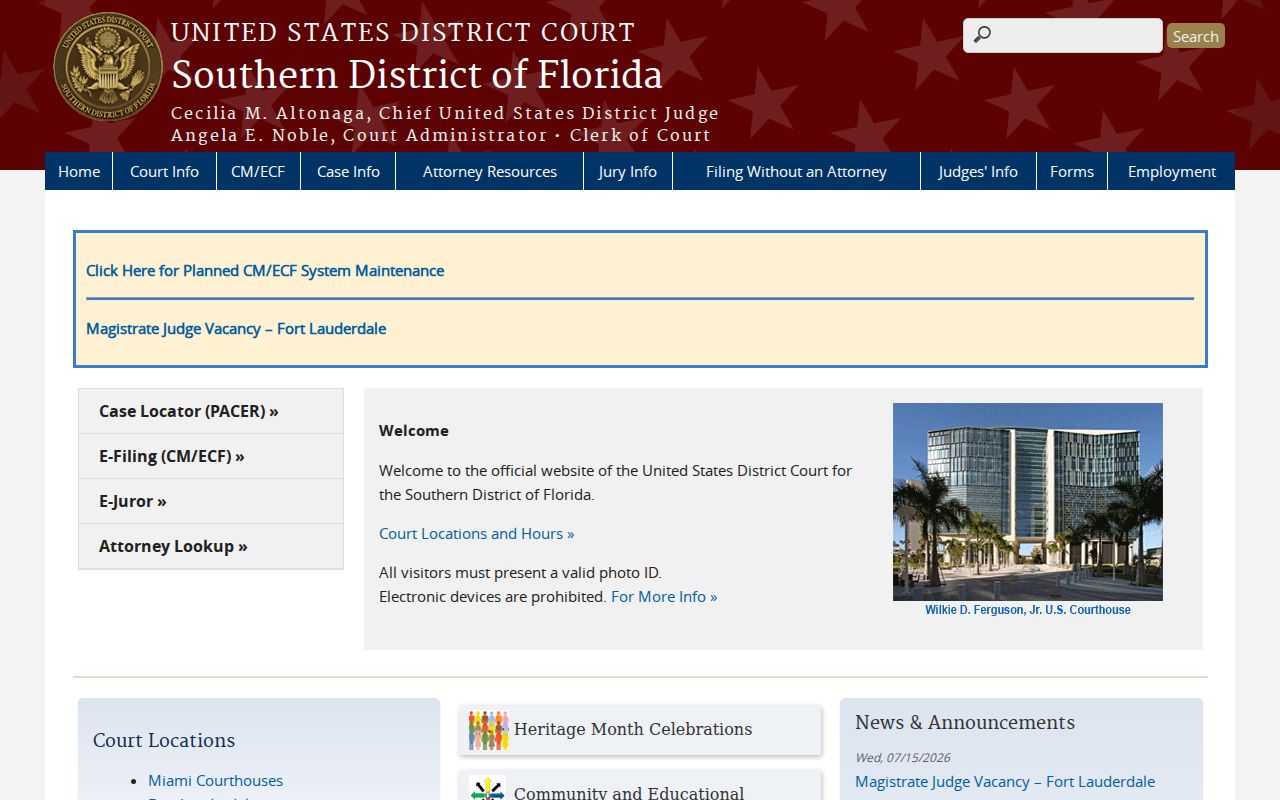
That court channel is needed when a matter is federal rather than a Florida prosecution.
The FBI electronic self-record source supplied this Identity History request image.
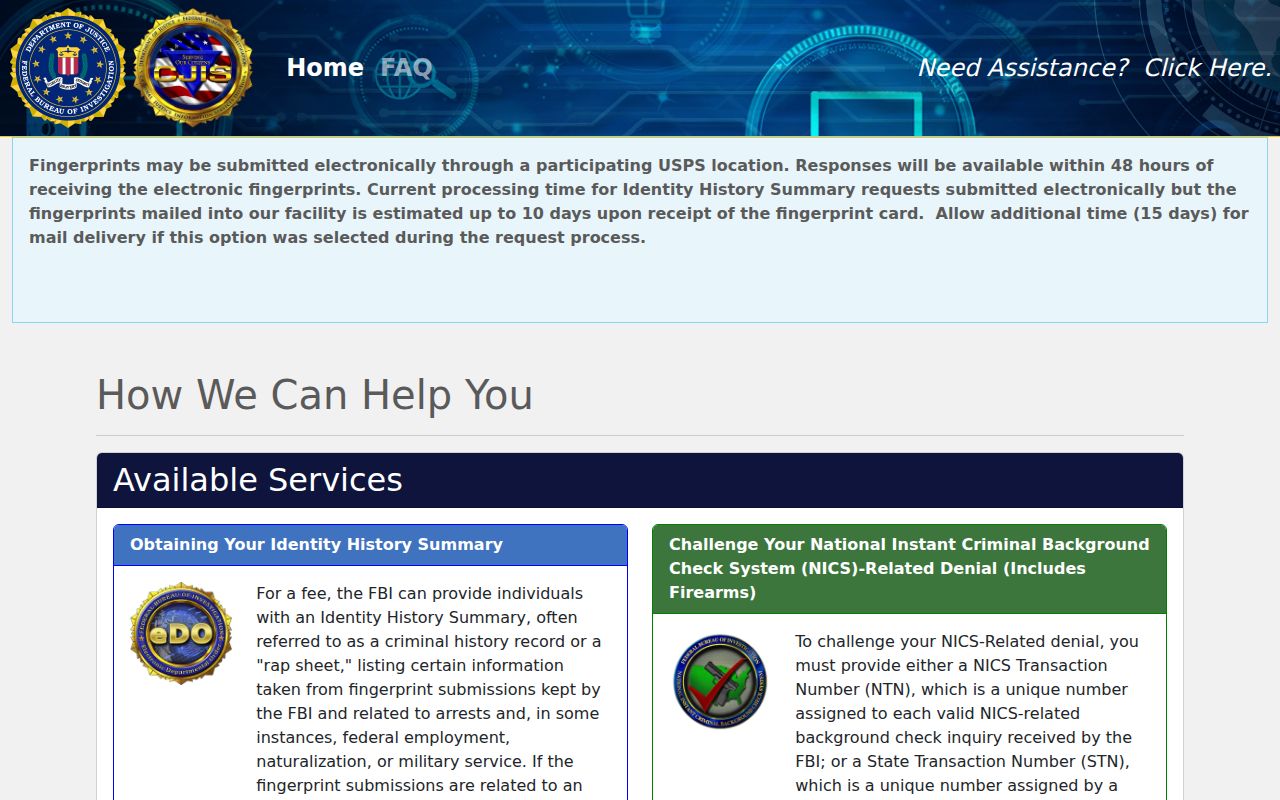
The FBI process is limited to a person's own summary and should not be confused with a public Broward name search.
Broward County Criminal Records by City
Fort Lauderdale, Pembroke Pines, and Hollywood are Broward's three largest incorporated cities. Each police department keeps the reports it creates, while custodial arrests enter BSO's county jail system and filed state crimes go to the Broward Clerk. The local guides identify the city records counter and explain where municipal administrative matters stop and county criminal court records begin.
Fort Lauderdale Criminal Records
FLPD records, BSO booking, and Broward court routing.
Pembroke Pines Criminal Records
PPPD Records, WebQA requests, and county case routing.
Hollywood Criminal Records
HPD reports, local checks, and Broward court routing.